
On the SSPX
An Anglo-Catholic Response

Introduction
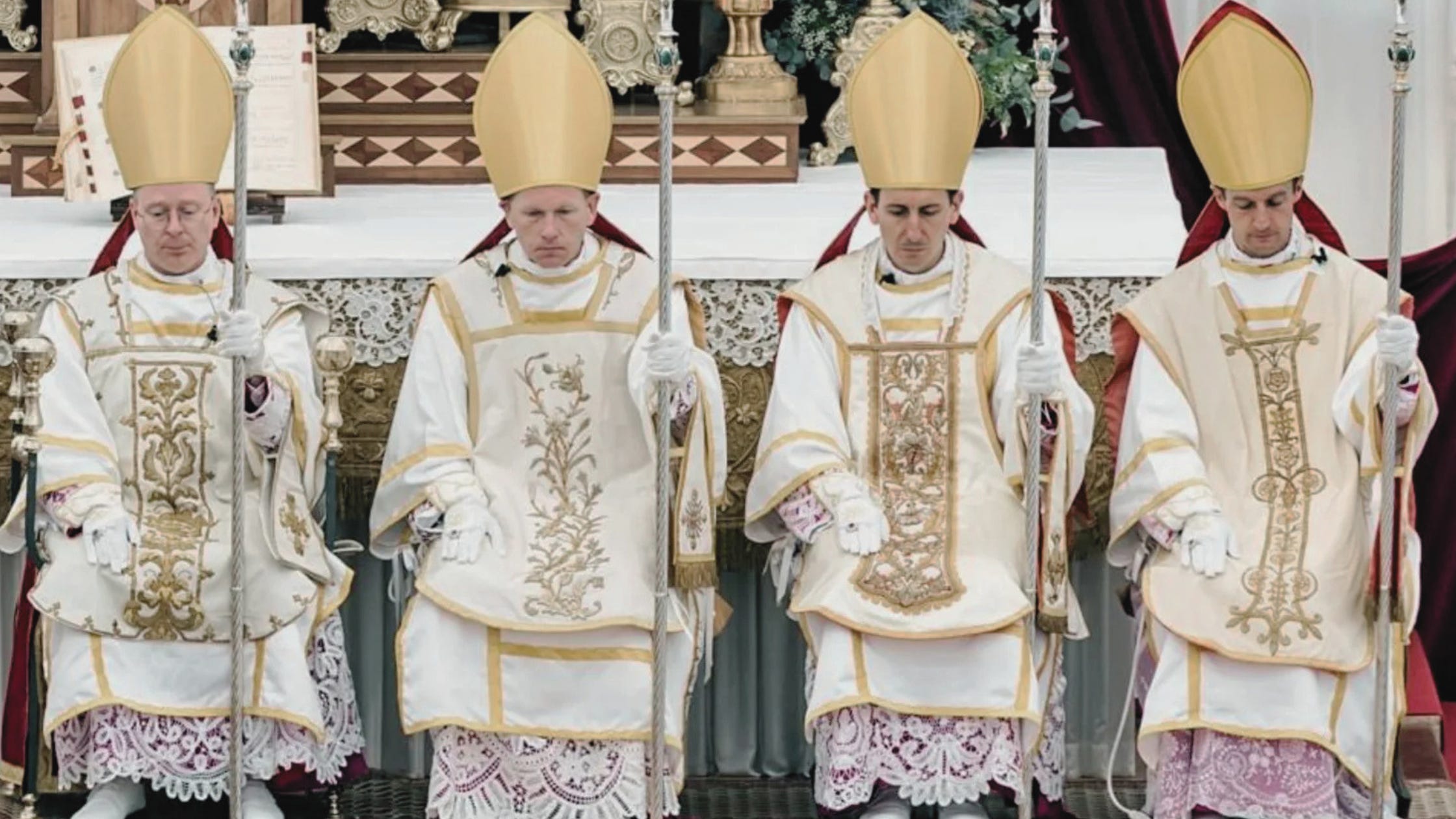
I have been following the news surrounding the conflict between the SSPX and the Vatican for a while now. This tension recently culminated in the SSPX hierarchy ignoring papal warnings and consecrating four new priests to the episcopate. Shortly after this act of disobedience, the Vatican responded by issuing an excommunication to the bishops and clergy of the SSPX, including an additional excommunication for any laity who, with full knowledge, continue in the fellowship of the SSPX.
As an Anglican, and more particularly, an Anglo-Catholic, I am deeply grieved in my spirit over this entire situation. Schism is a grave sin against the Body of Christ and should never be taken lightly. While others celebrate Reformation Day, I spend time that day mourning and repenting for the sins of those who came before me (on both sides). Similarly, with this situation, I see the hierarchy blinded by hubris on both sides. As a result, the precious Body of Christ has once again experienced a division in its unity and, therefore, in its witness to the world. Watching this unfold in real time has ultimately convinced me not only that both Rome and the SSPX have failed each other, but also that Anglican ecclesiology can offer a more coherent way of understanding the way authority in the Church should function.
Understanding the SSPX
Looking at things from the perspective of the SSPX, I am deeply sympathetic. They are Traditional Catholics. They are faithful to the Extraordinary Form of the Mass and have not bent the knee to modernity as I believe the Vatican has. Their cause is even more understandable when you look at the rampant—and public!—heresy that is tolerated by the Roman hierarchy. Fr. James Martin proudly supports homosexuality. He was invited to a private audience with Pope Leo. The German bishops have long since endorsed sodomy. Silence from the Vatican.
Yet, when Catholics who stand for truth, goodness, and beauty get too loud, the response from the Vatican is thunderous. Under the pontificate of Pope Francis, Bp. Joseph Strickland was forcefully removed from his canonical diocese for standing up for Sacred Tradition. The Latin Mass has been aggressively suppressed (and continues to be suppressed) by the Vatican and many of the bishop ordinaries around the world. And now this: the SSPX consecrates four individuals as bishops, and not even one day passes before excommunications come roaring out of the Vatican.
One might be more sensitive to the Vatican’s response if the silence regarding real matters that involve a break in dogma were also being addressed. However, given that those things are not happening, it is quite difficult to spin the Vatican in a positive light here. The message is very clear: Traditional Catholicism is not tolerated in the Roman Catholic Church, but modernity is.
The Ecclesiology of the SSPX
On an ecclesiastical level, I also resonate with the SSPX, who essentially made the decision to follow Old Catholic and Anglo-Catholic instincts on this matter. They recognize the primacy of St. Peter and accept his headship over the Catholic Church. However, at the end of the day, they also recognize that the conscience cannot be bound to teaching and tradition that conflicts with, and at times contradicts, the deposit of faith given once for all.
While there is much to love about the Second Vatican Council (which seems to be the hinge of this conflict), its teaching and implementation are no doubt a distinct break from what I will term “classical Latin theology.” There is continuity at times, most certainly, but there are also points and moments where the divide between the Tradition of the past and Vatican II’s vision of the future is clearly at odds. The SSPX recognizes this, and while seemingly desirous to remain in communion with the Roman Pontiff, they also made a decision they felt necessary to remain faithful to Sacred Tradition—something they clearly believe has more binding weight. At this point, the Anglo-Catholic would tip his biretta.
Jokes aside, the similarities with Anglo-Catholic ecclesiology are striking. We acknowledge the primacy of Rome. Most, if not all, Anglo-Catholics see communion with Rome as an important part of Catholic identity and something to be pursued, even if not strictly necessary for the Church to function licitly as the Church.
That said, we are not a huge fan of a Roman Pontiff who sits in a palace using his power to bludgeon the baptized if they dare question his actions and motives. Instead, we see the Bishop of Rome, at his very best, as the chief shepherd of the Church. He is the one to whom the faithful look for refuge. He is the visible center of unity; the one to whom the faithful should be unafraid to voice their concerns, and one who, like a loving father, listens to his children with compassion and care—even if, at times, it means changing his mind and publicly repenting.
The current iteration of the papacy makes this vision difficult to realize. Rome, as it stands today, makes it such that the Roman Pontiff can never truly be questioned regarding anything. It fundamentally creates a gridlock that, I believe, leads to the schisms we see today. If Rome teaches one thing one moment and another the next, it can be explained away simply by appeals to authority (a well-known fallacy). This leaves the faithful in a tough dilemma: either submit or renounce the Roman claims, the result of which is to place yourself outside of the Church.
If, for example, a group of Catholics look at some of the teaching of Vatican II or its implementation and find it to be in conflict with what came before, they cannot express this without first abandoning the Roman system. Thus, if the Roman See teaches something that truly conflicts with Tradition, one can never know, because that possibility will always be denied.
Thus, the SSPX, in some sense, was placed in an impossible situation. They either needed to abandon their reason, which identified that discontinuity between the Catholicism that was and the Catholicism that is, or they needed to reject that possibility and blindly submit to the modern papacy. The choice they made was one that Anglicans made during the English Reformation—albeit for different reasons. Thus, in the end, traditionalism demands fidelity to an ad fontes method of theology, as the SSPX has so boldly demonstrated. That being said, the sympathy I have for the SSPX ends where their ecclesiastical continuity with Anglicans ends and their theological emphasis begins.
Defending the Vatican
On the surface, the decision made by the SSPX resonates with the Anglo-Catholic understanding regarding the role of bishops. We do not regard them as an unquestionable authority, but as pastoral and unitive authority, subject to their faithfulness to Scripture and Tradition (an important qualifier).
The SSPX cannot truly claim to hold to this, as they affirm the dogma promulgated by Vatican I. Therefore, they diverge heavily with Anglicans precisely because they have to maintain cognitive dissonance when their fidelity to Tradition ends up with a visible denial of that very same Tradition they claim to hold.
This is where I truly feel sympathetic to the decision of the Vatican. They are the only truly consistent position in this conflict. The excommunication was, without a doubt, in accordance with papal dogma and canon law. I say this even as one who, on the outside, can see the double standard at play.
That said, this isn’t that complicated. If one claims to be Roman Catholic and will not submit to the papacy, they might be Traditional Catholics under a particular definition, but they cease to be Roman Catholics. Therefore, even if there are those (myself included) who regard the SSPX as more Catholic than the modern Vatican on historical grounds, it can not be said that they are more Roman Catholic than the modern Vatican on dogmatic grounds. Their actions show that they deny what they claim. In fact, the only way I can conceive of the SSPX as reaching a consistent position is if they formally deny the authority of the Pope. Until then, they can only exist as “sophisticated Protestants,” protesting the modern Roman Catholic Church.
It is on this note that I find the SSPX to be incoherent. Further, even as one who exists outside of communion with the Roman See, I find their blatant disregard for the directive of their ecclesiastical authority to be distressing. Even if I believe that Rome does not possess universal authority, defined the same way Roman Catholics would, the SSPX does not uphold such a denial. Thus, as far as I can tell, they have simply abandoned their ordination vows and overthrown the order of the Church as they understand it.
When I, as a deacon, was ordained, I vowed to obey the bishop as unto the Lord. The SSPX has disregarded this same directive as found in their ecclesiology. This is profoundly sad, as it has now resulted in the displacement of nearly half a million Roman Catholics, if not more. Pastoral concerns were overshadowed by political ones (on both sides), and it has resulted in great damage to the Body of Christ.
Even if one pushes back by suggesting that their preservation of the Latin Mass is a pastoral concern, they would have to make the case that the Novus Ordo lacks the same spiritual nourishment. In doing so, they would once again be overthrowing Roman Catholic teaching and, therefore, showing themselves to be thinking in Protestant terms. I have no problem with this, so long as they do not call themselves Roman Catholic. To suggest such a thing would be intellectually dishonest.
Concluding Thoughts
In the end, I hope I have sketched a reasonable case as to why both sides of this schism have good reasons to do what they have done, while also showing the profound failure on both sides. As an Anglican, this stark dichotomy certainly gives me greater comfort in my own theological ethos. It is often said that Anglicans have no unity and lack theological uniformity, and while this is true to an extent, it seems the Roman Catholic Church has the same problem.
Some might say, “Well, the SSPX isn’t Roman Catholic, so therefore we are united.” I’d agree, under the current ecclesiastical model that Rome has adopted. However, it doesn’t really address the problem regarding the lack of unity. I could just as easily say that all Anglicans who don’t hold to A, B, and C aren’t real Anglicans. However, I don’t do that because I’d rather just be honest about the fact that the Church is messy and that not everyone agrees regarding really important things.
I believe, sincerely, that Rome is a true Church. However, I think she has tried too hard to realize the eschatological reality of the Church prematurely. Instead of admitting the messiness of her ecclesial makeup, she simply insists that she is always right, to the exclusion of all dissenting voices. It happened at the Great Schism, it happened at the Protestant Reformation, and it has just happened again to the SSPX. I pray that one day Rome’s hierarchy will be open to return the Church back to a more concilier model, even if it remains papal led.
Needless to say, my heart is broken over this event. I regard both sides of this issue as my brothers and sisters in Christ and resonate with both of them and grieve over the witness that has been damaged through this schism. I commit to continued prayer for both the SSPX and the successor of St. Peter.
May Christ’s torn body be healed through tears of repentance, and may the Church one day visibly be one, that the world might see and believe.
The early 21st century has been characterized by governments which despise the people in whose name they hold power. While this has always been true of military dictators and socialist/communist governments, it has become the norm of both European and North American "liberal democracies" who hold their citizens in contempt while advancing their preferred elites.
This same sentiment, which has been a virulent undercurrent in the Vatican hierarchy in the last 50 years (I was born in the reign of Pius XII and remember the deaths of John XXIII & Paul VI clearly), has come to the surface in all its arrogance during the papacies of Francis I & now Leo XIV, who pursues Francis's policies, although he is better dressed.
In a sense, the "revolt" of the SSPX is (oddly) another facet of the Populism which has risen in Western societies as a response to the govening "elites", a call to return "ad fontes". Is it grief-making? Assuredly, but it may also come to be recognized as what Pope John Paul II said of the Protestant Reformation: "that tragic necessity".
An outstanding analysis. Thank you. I find myself very much on the side of SSPX, emotionally. Even as I acknowledge the logical inconsistencies which you point out.